How many calories are in my salad?
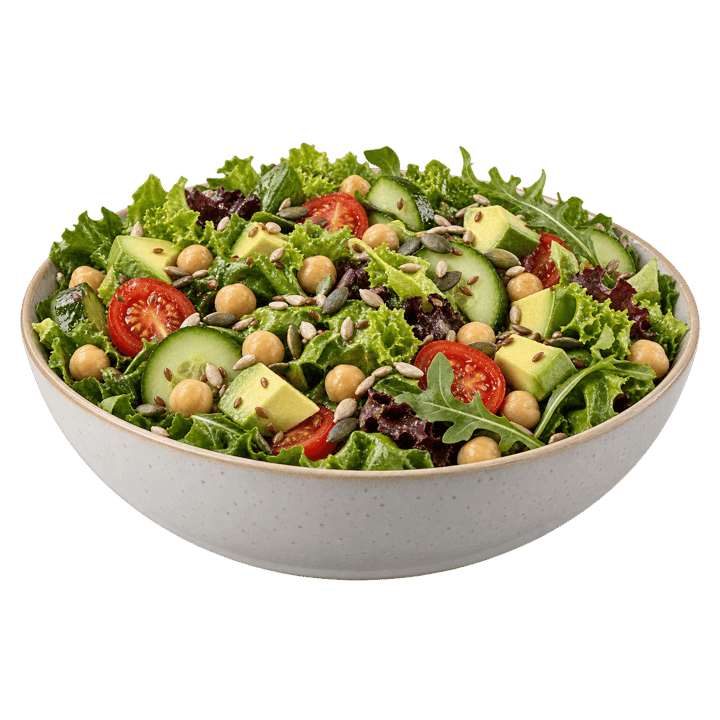
Tap in what's in your bowl and pour the dressing by the spoon. It fills from the bottom, the dressing goes on last, and the grade sits on the rim.
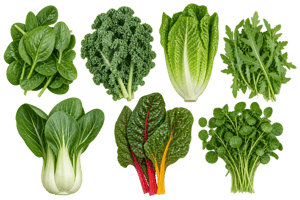
Your bowl is empty. Tap a green to start.
0calories
- Protein
- 0 g
- Fiber
- 0 g
- Fat
- 0 g
Graded for 170 lb, 3 meals a day, 2,000 calories a day: meals of 500 to 830 calories with 30 g of protein.
What your grade means
The letter is the average of six meters, the six jobs a meal does for your body. A bowl has to clear all six lines to get an A, so one miss caps it at B+, however good the rest is.
- A or A+. It's a meal. It fits your day, it's mostly real food, and it brings your protein, enough fiber and its share of the minerals and vitamins. Keep it in your rotation.
- B+ or B. One or two lines missed, and the meters show which. For a salad it's usually Energy (too light to be lunch), Processing (a bottled dressing that's a big share of the calories) or Muscle (no protein). The one change fixes the worst of them.
- C. A side dish trying to be a meal. Leaves do Nutrients and Glucose on their own, and the bowl is missing protein, fiber or calories. You'll be hungry by three.
Do it once with your usual bowl, measured. Pour your dressing into a tablespoon instead of guessing, and count the chicken by the palm. A lot of people find their "drizzle" is two or three tablespoons, and that the bowl they thought was lunch is a C. Then try the one change for a week and see if three o'clock feels different.
The six meters
These are the six systems Gyroscope grades every meal on, worked out here from a public food table so you can see the working. meals.guide's meal checker uses the same engine for any plate, and each meter below opens its page there. The app works its meters out its own way, so a bowl won't always get the same numbers in both.
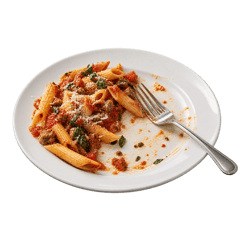 EnergyIs it the right size for your day?
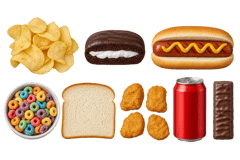 ProcessingIs it food, or a product made to be eaten fast?
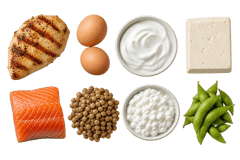 MuscleDoes it bring enough protein?
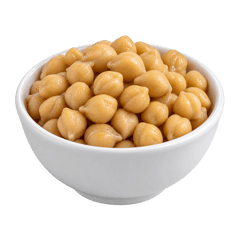 HungerWill it hold you until the next meal?
 NutrientsMinerals and vitamins for its calories?
 GlucoseDoes it keep your blood sugar steady?
Each meter runs from 0 to 100 and has a line. The grade is their average, on the Gyroscope app's letter cutoffs (A+ over 96, A from 90, B+ over 88, B from 80, C+ over 76, C from 50). For a 170 lb person eating 2,000 calories a day over three meals, the lines are these:
| Meter | What it counts | The line |
|---|---|---|
| Energy | The bowl's calories against a meal that fits your day, your day's calories over your meals, give or take a quarter (500 to 830) | Half a meal (330) up to the top of the window (830) |
| Processing | The share of the calories that isn't ultra-processed. Bottled dressings, croutons and tortilla strips are | 70 (no more than 30% ultra-processed) |
| Muscle | Protein against your share of 1.2 to 1.6 g per kg a day, 80 at 30 g and 100 at 40 g | 80 (30 g) |
| Hunger | Protein (45%), fiber against 9.3 g (30%), and how much food there is for the calories (25%): 1.5 calories a gram or less is full marks, 4 or more is none | 80 |
| Nutrients | Calcium and potassium (30%), iron (20%), vitamins A and C, thiamin, riboflavin and niacin (35%) against the bowl's calorie share of each Daily Value, and cups of vegetables, fruit and beans against 1.7 (15%) | 70 |
| Glucose | Fast carbs in full (added sugar, and starch with more than 10 g of carbs per gram of fiber), slow carbs at half, less up to 40% for the protein and fiber beside them. 100 at 15 g or less, 0 at 75 g | 70 |
One rule for salads: the color needs fat
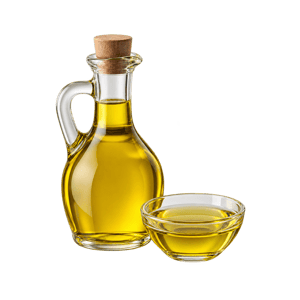
The orange and red in carrots, tomatoes and leaves (the carotenoids your body turns into vitamin A) only get into your blood dissolved in fat. When 7 people at Iowa State ate a salad with fat-free dressing, almost none reached their blood. So on this site, the vitamin A from vegetables counts toward Nutrients in proportion to the fat in the bowl, in full from 8 g, a little over half a tablespoon of oil. In a 2017 trial in 12 women, beta-carotene rose in a straight line from 0 to 8 g of oil. The fat can come from anything in the bowl, an egg, cheese, avocado or the dressing. It's the one rule meals.guide's plates don't have, and it's why a spoon of olive oil can lift a salad's grade where fat-free dressing can't.
Salt sits beside the grade
Sodium isn't one of the six meters, in the app or here, so it never moves the letter. The builder shows it under the meters against a meal's share of the 2,300 mg Daily Value, about 767 mg over three meals. Cheese, bacon, croutons, olives and bottled dressing carry most of a salad's. Canned beans do too: a cup of canned kidney beans in the USDA table has 873 mg, against 2 mg for black beans cooked without salt.
A salad before a meal isn't graded. Its job is to be big and light, and the Energy, Muscle and Hunger meters would fail a good side salad for the wrong reason. It gets the starter readout instead, against the Penn State first-course salads.
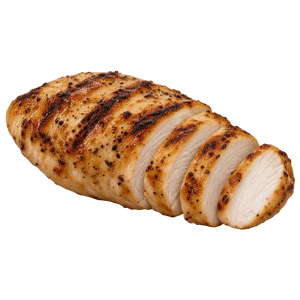
The one change tries every small edit a salad allows: add a palm of chicken, a can of tuna or two eggs when you're under your protein line, half a cup of chickpeas, beans, corn or quinoa, a tablespoon of olive oil when the bowl has no dressing with fat in it, swap a creamy, bottled or fat-free dressing for olive oil with vinegar or croutons for chickpeas, halve the dressing, cheese or croutons, or leave off the crunchy extras. It keeps the one that lifts the score most, and it fixes what's in the bowl before it adds to it.
The site's bowl, and three more, worked


The site's bowl
3 cups romaine, 1 palm chicken breast, ½ cup chickpeas, 1 tomato, ½ cup cucumber, 1 tbsp olive oil, 1 tbsp vinegar
450 calories, 39 g protein, 11.1 g fiber, dressing 27%, sodium 90 mg
- Energylight450 cal
- Processingwhole100% whole food
- Musclehigh39 g protein
- Hungerfilling11.1 g fiber, 0.8 cal a gram
- Nutrientsdense3½ cups of plants
- Glucosesteady1 g fast carbs
The one changeNone. It clears all six.
Salad with chicken and 2 tbsp of ranch
3 cups romaine, 1 palm chicken breast, 1 tomato, ½ cup cucumber, 2 tbsp ranch dressing
330 calories, 32 g protein, 4.8 g fiber, dressing 39%, sodium 360 mg
- Energysmall330 cal
- Processingmixed61% whole food
- Musclehigh32 g protein
- Hungerfilling4.8 g fiber, 0.7 cal a gram
- Nutrientsdense3 cups of plants
- Glucosesteady2 g fast carbs
The one changeSwap the ranch for a tablespoon of olive oil with vinegar and it's B+
Caesar with 3 tbsp of dressing, croutons and parmesan
3 cups romaine, 3 tbsp caesar dressing, 1 oz croutons, 2 tbsp parmesan
440 calories, 10 g protein, 4.4 g fiber, dressing 55%, sodium 1080 mg
- Energylight440 cal
- Processingprocessed16% whole food
- Musclevery low10 g protein
- Hungerlight4.4 g fiber, 1.8 cal a gram
- Nutrientsdense1½ cups of plants
- Glucosesteady17 g fast carbs
The one changeAdd a palm of chicken breast and it's B

Leaves only, with a tablespoon of Italian
4 cups romaine, ½ cup carrots, 1 cup cucumber, 1 tbsp italian dressing, bottled
140 calories, 6 g protein, 6.5 g fiber, dressing 50%, sodium 150 mg
- Energysmall140 cal
- Processingmixed50% whole food
- Musclevery low6 g protein
- Hungerlight6.5 g fiber, 0.3 cal a gram
- Nutrientsdense3½ cups of plants
- Glucosesteady1 g fast carbs
The one changeAdd a palm of chicken breast and it's B
A burger on whole wheat beats a side salad with ranch on these meters, for the same reasons. meals.guide runs the matchup and six more meals that grade the opposite of what you'd guess.
Where the numbers come from
Food values are from the USDA's Nutritive Value of Foods (Home and Garden Bulletin 72), minerals and vitamins included, the same rows meals.guide uses, so a food is the same number on both sites. Caesar and ranch dressing are USDA Standard Reference rows. Daily Values are the FDA's label values: calcium 1,300 mg, potassium 4,700 mg, iron 18 mg, vitamin A 900 mcg, vitamin C 90 mg. The bulletin has no column for added sugar, so bottled dressings count all their sugar and whole foods none. Hand measures follow the CDC: a palm is 3 oz of meat or fish, a cupped hand is an ounce of nuts.
Your bowl is kept in this browser and in the page's address, so you can send it to someone.
15 sources
- Gebhardt SE, Thomas RG. Nutritive Value of Foods. USDA ARS, Home and Garden Bulletin 72, 2002ars.usda.gov
- USDA Standard Reference, salad dressing, regular, caesar (nutritionvalue.org)nutritionvalue.org
- USDA Standard Reference, salad dressing, ranch, regular (nutritionvalue.org)nutritionvalue.org
- US Department of Agriculture and US Department of Health and Human Services. Dietary Guidelines for Americans, 2025 to 2030. January 2026cdn.realfood.gov
- Daily Servings by Calorie Level, Dietary Guidelines for Americans 2025 to 2030cdn.realfood.gov
- US Food and Drug Administration. Daily Value on the Nutrition and Supplement Facts Labels (current as of March 2024)fda.gov
- Monteiro CA, Cannon G, Levy RB, et al. Ultra-processed foods: what they are and how to identify them. Public Health Nutrition, 2019europepmc.org
- Hall KD, Ayuketah A, Brychta R, et al. Ultra-processed diets cause excess calorie intake and weight gain: an inpatient randomized controlled trial of ad libitum food intake. Cell Metabolism, 2019pmc.ncbi.nlm.nih.gov
- Rolls BJ. The relationship between dietary energy density and energy intake. Physiology and Behavior, 2009pmc.ncbi.nlm.nih.gov
- Mozaffarian RS, Lee RM, Kennedy MA, et al. Identifying whole grain foods: a comparison of different approaches for selecting more healthful whole grain products. Public Health Nutrition, 2013pubmed.ncbi.nlm.nih.gov
- Brown MJ, et al. Carotenoid bioavailability is higher from salads ingested with full-fat than with fat-reduced salad dressings as measured with electrochemical detection. Am J Clin Nutr 2004;80(2):396-403pubmed.ncbi.nlm.nih.gov
- White WS, et al. Modeling the dose effects of soybean oil in salad dressing on carotenoid and fat-soluble vitamin bioavailability in salad vegetables. Am J Clin Nutr 2017;106(4):1041-1051pmc.ncbi.nlm.nih.gov
- Rolls BJ, Roe LS, Meengs JS. Salad and satiety: energy density and portion size of a first-course salad affect energy intake at lunch. J Am Diet Assoc 2004;104(10):1570-1576pubmed.ncbi.nlm.nih.gov
- CDC. Diabetes Meal Planning (hand portions)cdc.gov
- meals.guide. Is my meal healthy? The six meters, with every formula (2026-11-15)meals.guide