How much dressing should I use?
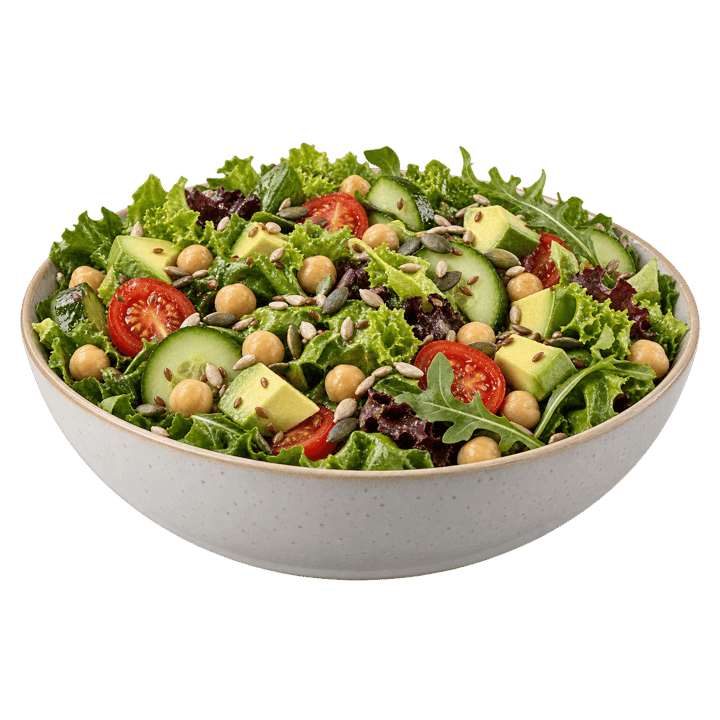
Pick your dressing and pour, from a teaspoon to a quarter cup. The ring shows how much of the bowl is the dressing.
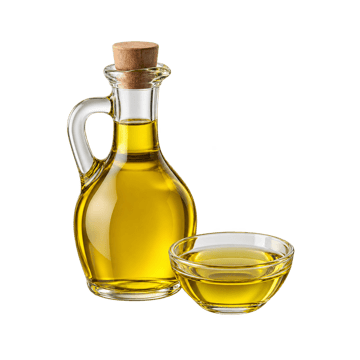
128calories of dressing
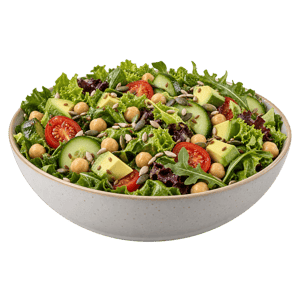
The bowl comes to 325 calories: 197 under the dressing and 128 on top, with 270 mg of sodium in the dressing.
We'd use one to two tablespoons of an oil-based dressing on a meal salad. Fat carries the vitamins in the vegetables, and in trials more fat absorbed more, but past two tablespoons it's mostly calories.
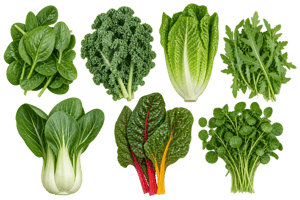
A tablespoon of olive oil has more calories than a whole head of romaine.
119 for the spoon of oil. 106 for the head of romaine, all 626 g of it. Olive oil is about 8 calories per ml.
What your pour means
If the ring shows the dressing at more than half the bowl, the dressing is the meal and the salad is the plate it came on. That's common: 2 tablespoons of ranch on a side salad is about three quarters of its calories. Between one and two tablespoons of an oil-based dressing gives the vegetables the fat they need and keeps the dressing well under half of a real meal. Past that, every extra spoon of olive oil is about 119 calories and no more vitamins you'd notice.
Do it once. Pour your usual amount into a cup the way you always do, then tip it into a tablespoon and count. Most people pour by eye, and the eye is generous. Once you know your drizzle is two and a half spoons, you can keep it or cut it, and both are a choice.
Every dressing, per tablespoon
| Dressing | Calories | Fat | Sodium |
|---|---|---|---|
| Olive oil | 119 | 14 g | 0 mg |
| Olive oil and vinegar, 3 to 1 | 90 | 10.5 g | 0 mg |
| Caesar | 80 | 8.5 g | 178 mg |
| Ranch | 64 | 6.7 g | 135 mg |
| Blue cheese | 77 | 8 g | 167 mg |
| Thousand island | 59 | 6 g | 109 mg |
| Italian, bottled | 69 | 7 g | 116 mg |
| French | 67 | 6 g | 214 mg |
| Light Italian | 16 | 1 g | 118 mg |
| Lemon juice | 3 | 0 g | 3 mg |
| Vinegar | 2 | 0 g | 0 mg |
A quarter cup is 4 tablespoons, about 59 ml: ranch about 256 calories, caesar about 320, olive oil 476. A ladle or a 2 oz cup holds about that much. The 3 to 1 vinaigrette is three parts olive oil to one of vinegar.
Why keep some fat
The orange and red in carrots and tomatoes, and the vitamin K in the leaves, dissolve in fat, not water. In a 2004 study, 7 people ate the same salad of spinach, romaine, cherry tomatoes and carrots with dressing made with 0, 6 or 28 g of canola oil. With the fat-free dressing they absorbed almost no beta-carotene, alpha-carotene or lycopene, and more oil meant more absorbed.
Two later trials found the same. In 29 adults, the amount of fat mattered more than the kind (canola, soybean or butter at 3, 8 or 20 g). In 12 women given 0 to 32 g of soybean oil, more oil absorbed more alpha-carotene, lycopene and vitamin K across the whole range. All three were small and measured one meal, not health. A tablespoon of olive oil is about 14 g of fat, and two are close to the study's 28 g.
So we'd keep one to two tablespoons of an oil-based dressing on a meal salad, and measure it with a spoon.
7 sources
- Gebhardt SE, Thomas RG. Nutritive Value of Foods. USDA ARS, Home and Garden Bulletin 72, 2002ars.usda.gov
- USDA Standard Reference, oil, salad or cooking, olive (nutritionvalue.org)nutritionvalue.org
- USDA Standard Reference, salad dressing, regular, caesar (nutritionvalue.org)nutritionvalue.org
- USDA Standard Reference, salad dressing, ranch, regular (nutritionvalue.org)nutritionvalue.org
- Brown MJ, et al. Carotenoid bioavailability is higher from salads ingested with full-fat than with fat-reduced salad dressings as measured with electrochemical detection. Am J Clin Nutr 2004;80(2):396-403pubmed.ncbi.nlm.nih.gov
- Goltz SR, et al. Meal triacylglycerol profile modulates postprandial absorption of carotenoids in humans. Mol Nutr Food Res 2012;56(6):866-877pubmed.ncbi.nlm.nih.gov
- White WS, et al. Modeling the dose effects of soybean oil in salad dressing on carotenoid and fat-soluble vitamin bioavailability in salad vegetables. Am J Clin Nutr 2017;106(4):1041-1051pmc.ncbi.nlm.nih.gov