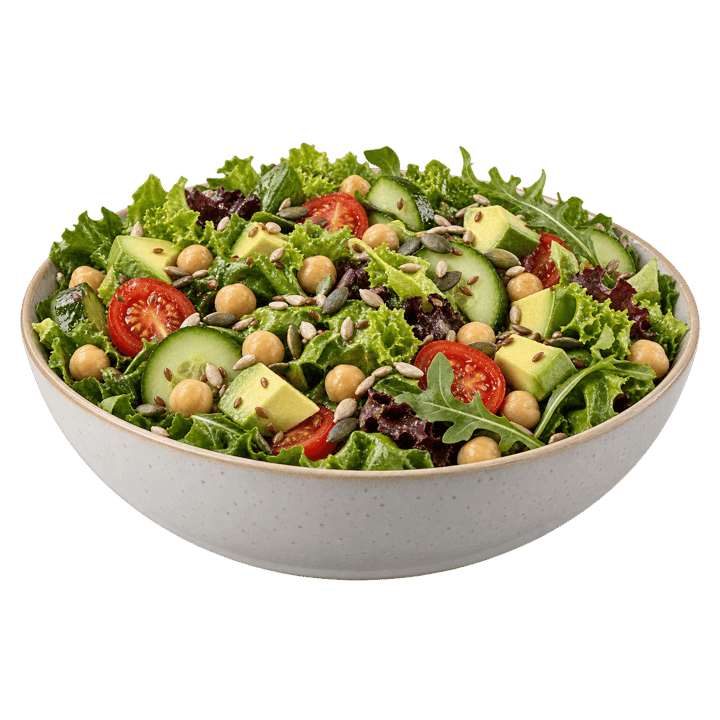
Do you need fat to absorb the vitamins in a salad?
Yes. When 7 people ate a salad with fat-free dressing, almost none of its beta-carotene, alpha-carotene or lycopene reached their blood. With oil in the dressing, much more did, and in two later trials more oil meant more absorbed. The kind of fat mattered less than the amount.
Fat-free dressing feels like the responsible choice, since it cuts the calories and keeps the vegetables. But the carrots, tomatoes and spinach in your salad are full of carotenoids, the yellow, orange and red pigments your body turns partly into vitamin A, and they dissolve in fat and not in water. Eat them with no fat and most of them pass straight through.
What we’d do
Never eat a salad with no fat on it. One to two tablespoons of an oil-based dressing is the easy way, and olive oil with vinegar or lemon is our pick. Avocado, an egg, cheese or a few nuts in the bowl add fat too, so a smaller pour of dressing is fine when they’re there.
Think of how water alone won’t rinse oil off a pan. The orange and red pigments in vegetables behave the same way, and they need fat to carry them.
How it works
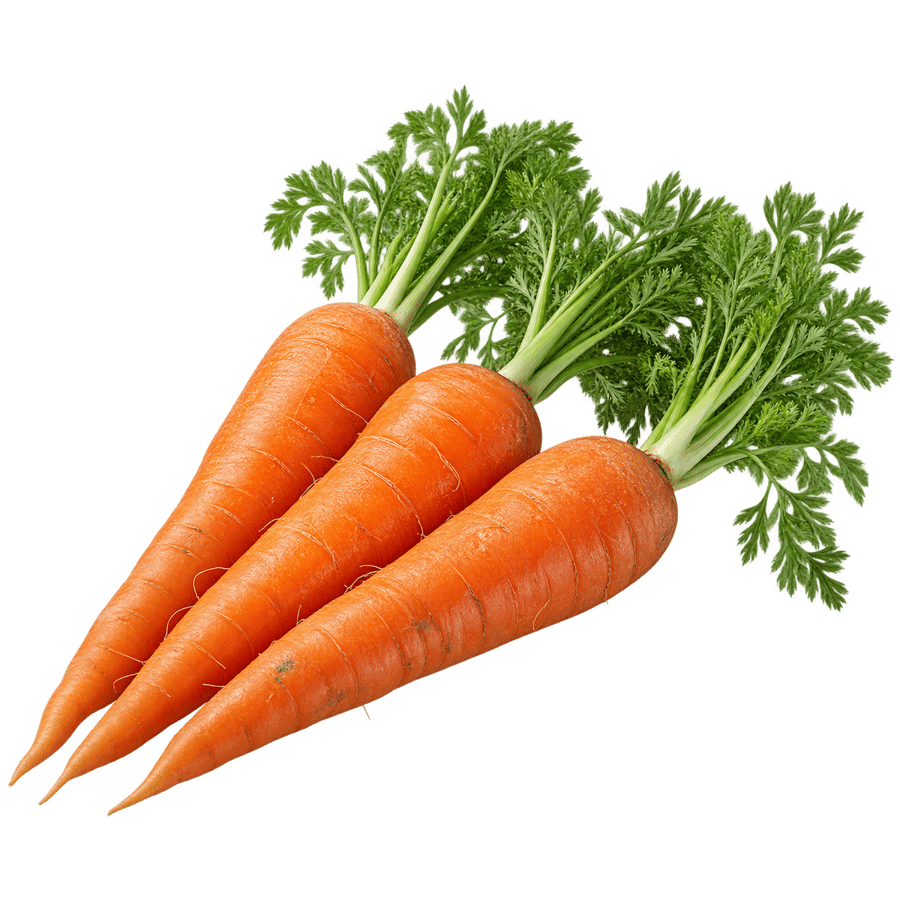
- The pigments dissolve in fat. Beta-carotene in carrots and spinach, lycopene in tomatoes and vitamin K in leafy greens all mix into fat and not into water.
- Your gut takes them in with the fat. When a meal has fat in it, the pigments travel with that fat into the cells lining your gut.
- They ride into your blood in fat particles. The gut cells pack the fat and the pigments into particles called chylomicrons, which carry them into the bloodstream. That’s what the researchers measured.
- No fat means few particles. With nothing to carry them, the pigments mostly stay in the food and leave the body.
People vary a lot in how much they absorb, and some people in the 2017 trial barely responded to the oil at all, but on average more oil meant more absorbed.
The three trials
Fat-free, reduced-fat, full-fat
7 people, one salad three times. Iowa State, American Journal of Clinical Nutrition, 2004
The same salad of spinach, romaine, cherry tomatoes and carrots with dressing made with 0, 6 or 28 g of canola oil. With the fat-free dressing the carotenoids that showed up in the blood were “negligible”. The 6 g dressing let more through, and the 28 g dressing more again.
Only 7 people, and each salad was one meal.
How much against which kind
29 adults, salads with three fats at three amounts. Molecular Nutrition and Food Research, 2012
Canola oil, soybean oil or butter at 3, 8 or 20 g. 20 g gave more absorption than 3 or 8 g for almost every carotenoid. The kind of fat had less effect than the amount.
Canola only trended above butter, and not significantly.
Five doses of oil
12 women, five salads. American Journal of Clinical Nutrition, 2017
Dressing with 0, 2, 4, 8 or 32 g of soybean oil. Absorption of alpha-carotene, lycopene and vitamin K rose in a line all the way to 32 g, and beta-carotene up to 8 g. Absorption was highest at 32 g.
12 people, and some barely responded to the oil.
We’re confident that fat-free dressing costs you most of the carotenoids in a salad, because three separate trials point the same way. The evidence on how much fat is best is thinner. Nobody has tested whether this changes anyone’s health over years, since all three measured what got into the blood after one meal.
How much fat is enough?
Two tablespoons of olive oil is about 27 g of fat, close to the biggest amounts tested (28 g and 32 g). One tablespoon is 13.5 g, between the 8 g and 20 g amounts in the 2012 trial. Since the kind of fat mattered less than the amount, fat from an egg, cheese, avocado or nuts in the same bowl should help too, though the trials only tested oils and butter.
The catch is calories. Every tablespoon of olive oil is 119, so one to two is where we’d stop. On the pour, a dressing with no fat in it gets its own warning line.
4 sources
- Brown et al., Carotenoid bioavailability is higher from salads ingested with full-fat than with fat-reduced salad dressings as measured with electrochemical detection, American Journal of Clinical Nutrition, 2004pubmed.ncbi.nlm.nih.gov
- Goltz et al., Meal triacylglycerol profile modulates postprandial absorption of carotenoids in humans, Molecular Nutrition and Food Research, 2012pubmed.ncbi.nlm.nih.gov
- White et al., Modeling the dose effects of soybean oil in salad dressing on carotenoid and fat-soluble vitamin bioavailability in salad vegetables, American Journal of Clinical Nutrition, 2017pmc.ncbi.nlm.nih.gov
- USDA Standard Reference, oil, salad or cooking, olivenutritionvalue.org