How much dressing should I use?
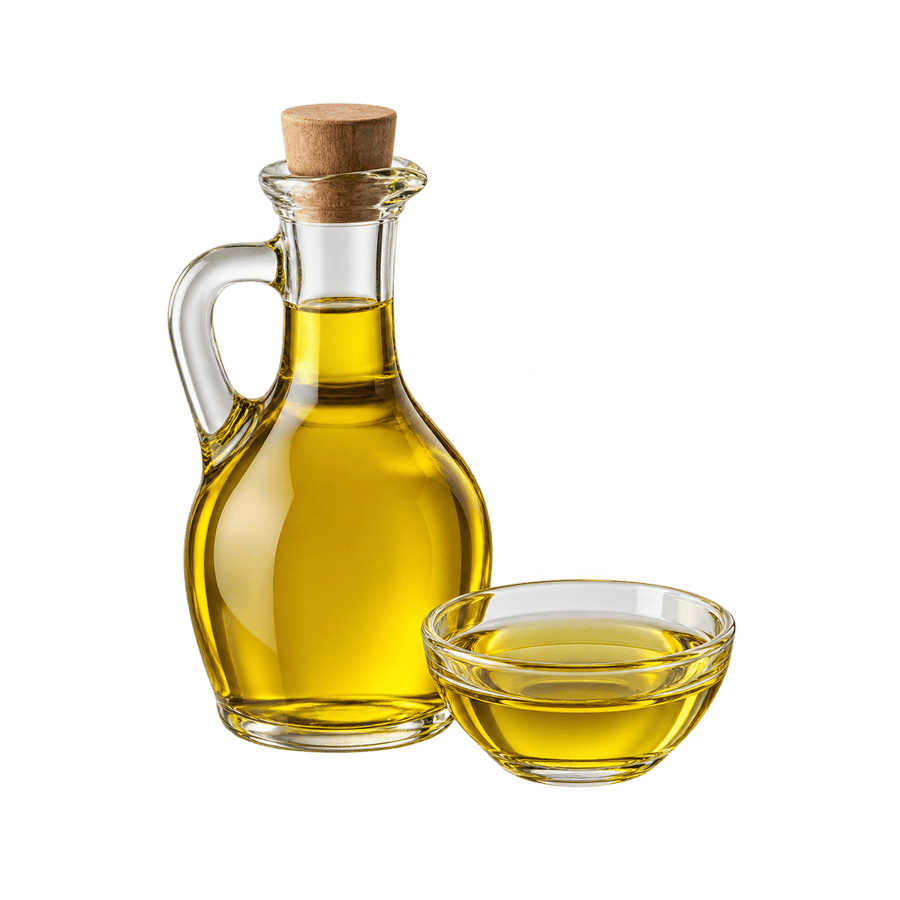
One to two tablespoons on a salad that’s your meal, and about one on a side salad, measured with a real spoon. Make it an oil-based dressing like olive oil with vinegar or lemon. The fat carries the vitamins in the vegetables into your body, and past two tablespoons you’re mostly adding calories.
Dressing usually goes on without a measure, from the bottle or from a ladle at the salad bar, and a ladle or a 2 oz cup holds about four tablespoons. That’s 256 calories of ranch or 320 of caesar, on about 24 calories of lettuce. The opposite move, going fat-free, costs you most of the vitamins you ate the salad for.
What we’d do
Use one to two tablespoons of an oil-based dressing on a meal salad, and never fat-free. Measure it with a tablespoon for the first week so your eye learns what it looks like, then pour by eye. When you eat out, get it on the side and use a spoon or two of it.
Fat in a dressing works like a ferry for the orange and red pigments in carrots and tomatoes. Without one they stay on the shore, and in the trials a bigger ferry carried more of them across.
Calories at the amounts people pour
| Dressing | 1 tbsp | 2 tbsp | 4 tbsp, a ladle or 2 oz cup |
|---|---|---|---|
| Olive oil | 119 | 238 | 476 |
| Olive oil and vinegar, 3 to 1 | 90 | 180 | 359 |
| Caesar | 80 | 160 | 320 |
| Blue cheese | 77 | 154 | 308 |
| Italian, bottled | 69 | 138 | 276 |
| French | 67 | 134 | 268 |
| Ranch | 64 | 128 | 256 |
| Thousand island | 59 | 118 | 236 |
| Light Italian | 16 | 32 | 64 |
| Lemon juice or vinegar | about 3 | about 5 | about 10 |
Values from the USDA. The vinaigrette is three parts olive oil to one part vinegar.
Why one to two tablespoons
The low end comes from the vitamins. The yellow, orange and red pigments in vegetables (carotenoids, which your body turns partly into vitamin A) dissolve in fat and not in water. At Iowa State in 2004, 7 people ate the same salad of spinach, romaine, cherry tomatoes and carrots with dressing made with 0, 6 or 28 g of canola oil. With the fat-free dressing, the alpha-carotene, beta-carotene and lycopene that showed up in their blood was “negligible”. The 6 g dressing let more through, and the 28 g dressing more again.
Two later trials agreed on the direction. In 2012, 29 adults ate salads with 3, 8 or 20 g of canola oil, soybean oil or butter, and 20 g beat the smaller amounts. The kind of fat mattered less than the amount. In 2017, 12 women had dressing with 0, 2, 4, 8 or 32 g of soybean oil, and absorption of alpha-carotene, lycopene and vitamin K rose in a line all the way to 32 g. Beta-carotene rose up to 8 g.
The high end comes from the calories. Two tablespoons of olive oil is about 27 g of fat, close to the biggest amounts those trials used (28 and 32 g). None of the trials went past 32 g, and every extra tablespoon of oil is another 119 calories. All three trials were small and measured what people absorbed after one meal, so we can’t say how much this changes anyone’s health over years. But fat-free costs you the carotenoids, and two tablespoons is about where the tested range ends.
Creamy dressings carry less fat per spoon than oil (6.7 g in a tablespoon of ranch against 13.5 in olive oil) and more of other things, like 178 mg of sodium in a tablespoon of caesar.
Try it
Pick your dressing on the pour and slide from a teaspoon to a quarter cup. You’ll see the moment your dressing passes everything else in the bowl. For the full story on fat and vitamins, see do you need fat to absorb the vitamins in a salad.
7 sources
- Brown et al., Carotenoid bioavailability is higher from salads ingested with full-fat than with fat-reduced salad dressings as measured with electrochemical detection, American Journal of Clinical Nutrition, 2004pubmed.ncbi.nlm.nih.gov
- Goltz et al., Meal triacylglycerol profile modulates postprandial absorption of carotenoids in humans, Molecular Nutrition and Food Research, 2012pubmed.ncbi.nlm.nih.gov
- White et al., Modeling the dose effects of soybean oil in salad dressing on carotenoid and fat-soluble vitamin bioavailability in salad vegetables, American Journal of Clinical Nutrition, 2017pmc.ncbi.nlm.nih.gov
- USDA Standard Reference, oil, salad or cooking, olivenutritionvalue.org
- USDA Standard Reference, salad dressing, regular, ranchnutritionvalue.org
- USDA Standard Reference, salad dressing, regular, caesarnutritionvalue.org
- Gebhardt and Thomas, Nutritive Value of Foods, Home and Garden Bulletin 72, USDA Agricultural Research Service, 2002ars.usda.gov