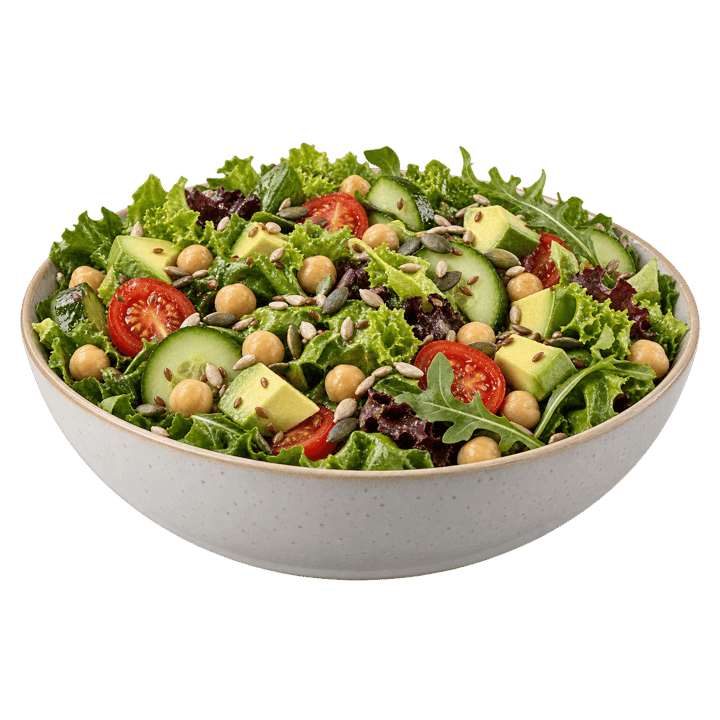
Iceberg lettuce has no nutrition
Short answerSort of
On this page
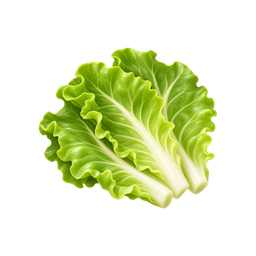
Sort of. Iceberg is about 96% water, and it has much less of every vitamin than romaine or spinach. A cup has about 17 mcg of vitamin K, where spinach has 145. But it isn’t nothing. Two cups count as a cup of vegetables in the US guidelines, and a whole head has only about 65 calories.
What we’d do
Keep iceberg for the crunch, and mix it half and half with a darker green like romaine or spinach. You keep the cold snap of a wedge or a taco salad and pick up most of the vitamins. And if iceberg is the salad you’ll actually eat, eat it, since a bowl of iceberg is still a bowl of vegetables.
If you remember three things
- Iceberg is the lowest-vitamin lettuce. Romaine has about three times its vitamin K and folate per cup, and eleven times its vitamin A.
- It still counts. Two cups of any leafy green make one cup of vegetables.
- Half and half fixes most of it. A cup of iceberg and a cup of spinach have about 162 mcg of vitamin K, against 35 for two cups of iceberg.
Why people believe it
Iceberg is pale, crisp and mostly water, and it tastes of very little. It’s the lettuce in the cheap side salad and under the burger, and for years it’s been the example people use for a vegetable with nothing in it.
Iceberg is like the ice in a cold drink. It’s mostly water and it’s there for the crunch and the chill, and only a little else comes with it.
What a cup of iceberg has
| Per cup | Iceberg, 72 g | Romaine, 47 g | Spinach, 30 g |
|---|---|---|---|
| Calories | 10 | 8 | 7 |
| Water | About 96% | About 95% | About 92% |
| Vitamin K | 17 mcg | 48 mcg | 145 mcg |
| Folate | 21 mcg | 64 mcg | 58 mcg |
| Vitamin A | 18 mcg | 205 mcg | 141 mcg |
| Vitamin C | 2 mg | not listed | 8.4 mg |
| Fiber | 0.9 g | 1 g | 0.7 g |
Folate is in mcg DFE and vitamin A in mcg RAE. Iceberg is behind on every vitamin, by the most on vitamin A.
Why “sort of” and not “yes”
Iceberg still counts toward your vegetables. The 2025 to 2030 US guidelines count two cups of leafy greens as one cup of vegetables, and they don’t say which greens. A 3 cup bowl of iceberg is a cup and a half of vegetables, which is half of the 3 a day the guidelines set for a 2,000 calorie diet.
And all that water is useful. In a year-long trial at Penn State, women who were told to eat more water-rich foods, mostly vegetables and fruit, alongside less fat, lost more weight than women who only cut fat, and said they were less hungry. Iceberg is about as water-rich as a food gets, at about 65 calories for a whole head.
The trouble with iceberg salads
The problem is usually what goes on top. A wedge-style salad, about 3 cups of iceberg with a quarter cup of blue cheese dressing, 3 slices of bacon and a tomato, comes to about 464 calories. The iceberg is about 21 of them and the dressing about 308, two thirds of the bowl.
The best case for calling it worthless
“Why eat a lettuce with a fraction of the vitamins when spinach costs about the same?” If you’ll eat spinach or romaine just as happily, do that, and you’ll get several times the vitamins for the same calories. But plenty of people like iceberg’s crunch and won’t eat a bowl of spinach. For them, iceberg mixed with a darker green is a better salad than none.
If you take warfarin, keep the amount of leafy greens steady week to week. Vitamin K changes how warfarin works, and switching from iceberg to spinach multiplies your vitamin K even at the same size bowl, so talk to your doctor before a big change.
7 sources
- USDA Standard Reference, lettuce, raw, iceberg (includes crisphead types)nutritionvalue.org
- USDA Standard Reference, lettuce, cos or romaine, rawnutritionvalue.org
- USDA Standard Reference, spinach, rawnutritionvalue.org
- Gebhardt and Thomas, Nutritive Value of Foods, Home and Garden Bulletin 72, USDA Agricultural Research Service, 2002 (iceberg items 1123 and 1124, blue cheese dressing item 189)ars.usda.gov
- USDA, Daily servings by calorie level, 2025 to 2030cdn.realfood.gov
- Ello-Martin et al., Dietary energy density in the treatment of obesity: a year-long trial comparing 2 weight-loss diets, American Journal of Clinical Nutrition, 2007pubmed.ncbi.nlm.nih.gov
- MedlinePlus, Warfarin, US National Library of Medicine, checked 2026-11-14medlineplus.gov