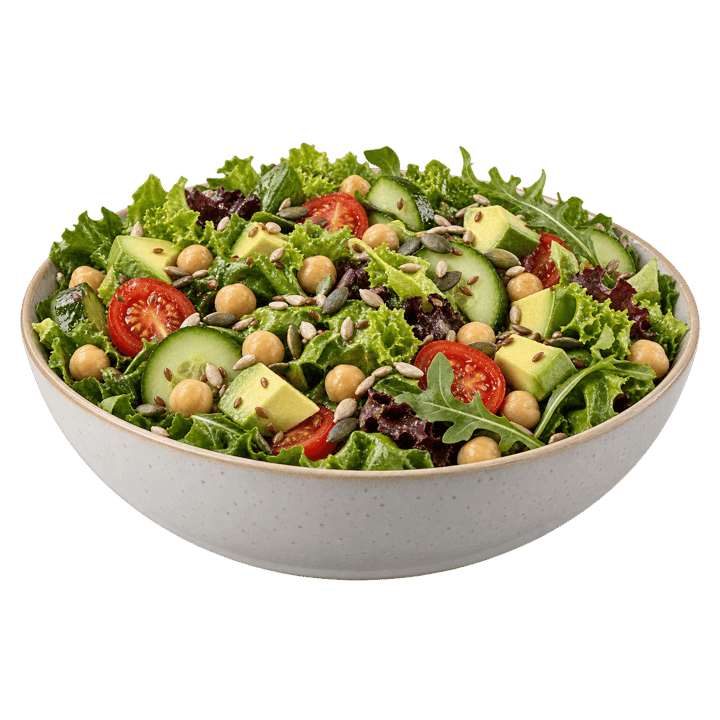
Kale is the healthiest green
Short answerNot the way you think
On this page
Not the way you think. Per cup, the way you fill a salad bowl, spinach has nearly twice kale’s vitamin K and four times its folate, and plain romaine beats it on folate and vitamin A. That’s because a cup of chopped kale weighs only 21 g. Per 100 g, kale wins on vitamin C and fiber. No green wins everything.
What we’d do
Rotate your greens. Use spinach or romaine as the base, since you get more per cup and they’re easy to eat raw by the bowl, and add a handful of kale for its vitamin C and its chew. If you love a kale salad, have it, and know that a big bowl of spinach is giving you more of most things.
If you remember three things
- A cup of kale is light. It weighs 21 g, against 30 g for spinach and 47 g for romaine.
- Per cup, spinach and romaine beat kale on most vitamins. Kale keeps the lead on vitamin C, about 20 mg a cup.
- Weighed out, spinach still beats kale on vitamin K, folate and vitamin A. Kale wins vitamin C and fiber.
Why people believe it
Kale became the poster green of healthy eating, the one on the smoothie menu and the salad bar sign. It earned some of that. Per 100 g it has about 93 mg of vitamin C, three times spinach’s, and about 4.1 g of fiber, nearly twice spinach’s. Charts list nutrients per 100 g, so kale looks like a champion.
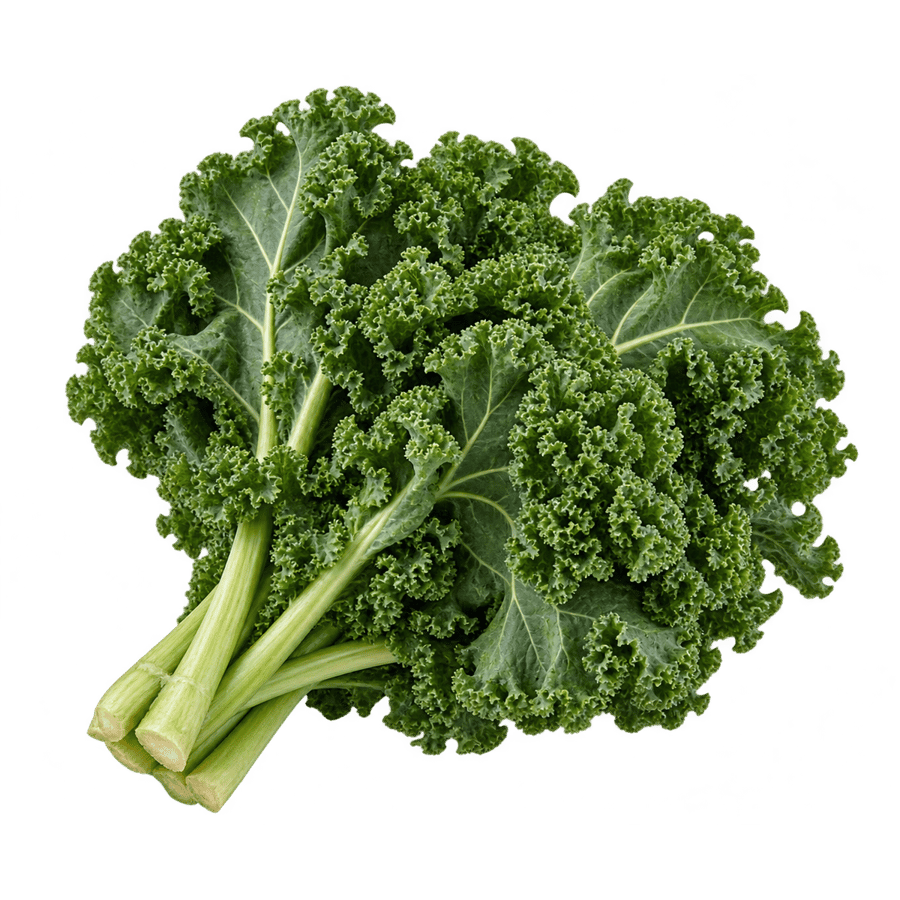
But you don’t fill a salad bowl on a kitchen scale. You fill it by the cup, and curly kale leaves pack loosely, with a lot of air between them.
Measuring kale by the cup is like buying chips by the size of the bag. A lot of what you’re looking at is air. To eat 100 g of raw chopped kale you’d need almost 5 cups.
Per cup against per 100 g
| Kale, per cup (21 g) | Spinach, per cup (30 g) | Romaine, per cup (47 g) | Kale, per 100 g | Spinach, per 100 g | |
|---|---|---|---|---|---|
| Vitamin K | 82 mcg | 145 mcg | 48 mcg | 390 mcg | 483 mcg |
| Folate | 13 mcg | 58 mcg | 64 mcg | 62 mcg | 193 mcg |
| Vitamin A | 51 mcg | 141 mcg | 205 mcg | 243 mcg | 470 mcg |
| Vitamin C | 19.6 mg | 8.4 mg | not listed | 93 mg | 28 mg |
| Fiber | 0.9 g | 0.7 g | 1 g | 4.1 g | 2.2 g |
| Calories | 7 | 7 | 8 | 33 | 23 |
Folate is in mcg DFE and vitamin A in mcg RAE. The per 100 g values are worked out from the cup weights USDA lists.
Two things flip depending on how you measure. By the cup, romaine has the most folate and vitamin A of the three, and kale the least. By weight, spinach takes both. Kale keeps vitamin C either way, and wins fiber by weight. Greens compared switches between the two and sorts by each nutrient.
What kale is good for
Kale has the most vitamin C here by any measure, about 20 mg a cup, and 53 mg of calcium a cup. Its chewy, sturdy leaves also make a good contrast mixed into softer greens.
What it isn’t is the best green at everything. Spinach has more vitamin K, folate and vitamin A, by the cup and by weight. Romaine, the lettuce nobody brags about, has nearly five times kale’s folate and four times its vitamin A per cup.
The best case for kale
“Per 100 g, kale has three times the vitamin C and twice the fiber of spinach. Gram for gram it’s the better food.” The numbers are right, and if you weigh your food, the per 100 g view is the one to use. For a raw salad, you fill the bowl by volume, and per cup spinach and romaine put more of most vitamins in it. Neither green covers everything, which is the reason to mix them.
If you take warfarin, keep the amount of leafy greens steady week to week. Vitamin K changes how warfarin works, and a cup of spinach has nearly twice the vitamin K of a cup of kale, so swapping one for the other is a change too. Talk to your doctor before a big change.
4 sources
- USDA Standard Reference, kale, rawnutritionvalue.org
- USDA Standard Reference, spinach, rawnutritionvalue.org
- USDA Standard Reference, lettuce, cos or romaine, rawnutritionvalue.org
- MedlinePlus, Warfarin, US National Library of Medicine, checked 2026-11-14medlineplus.gov