Olive oil is healthy, so the amount doesn't matter
Short answerNo
On this page
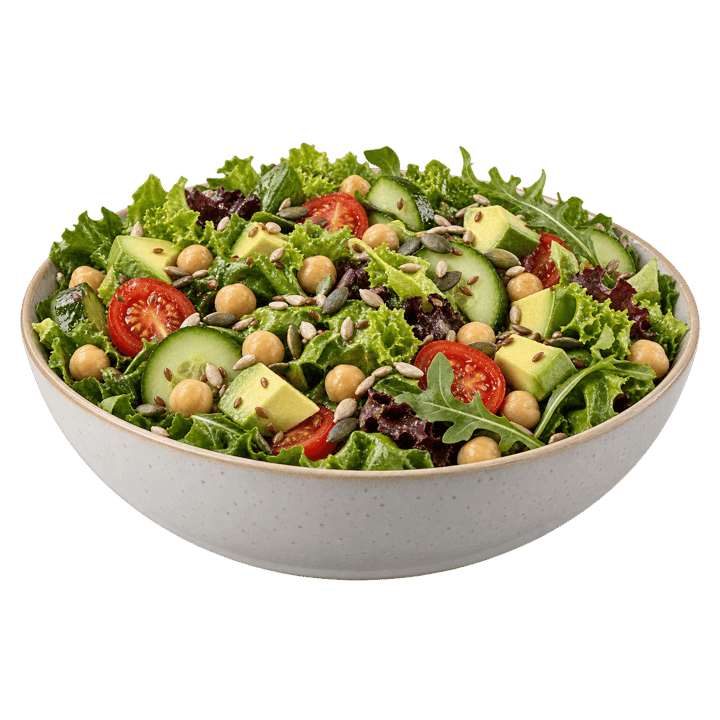
No. Olive oil is a good fat, and it’s still the most calorie-dense thing in your salad. A tablespoon has about 119 calories, more than a whole head of romaine at about 106. Keep the oil, since the vegetables need some fat for you to absorb their vitamins, and measure it with a spoon.
What we’d do
Use olive oil as your dressing, one tablespoon on a normal salad and two on a big meal bowl. Measure it with a real spoon for a week, and after that keep pouring into the spoon instead of straight from the bottle. Don’t swap it for fat-free to save calories. Save them on croutons and cheese instead.
If you remember three things
- A tablespoon of olive oil beats a whole head of romaine. About 119 calories against about 106.
- Olive oil has more calories than butter. About 119 a tablespoon against 102, since butter is part water.
- The difference between a spoon and a pour is hundreds of calories. A quarter cup is 4 tablespoons, about 476 calories.
Why people believe it
Olive oil has the best reputation of any fat. The 2025 to 2030 US guidelines say to “prioritize oils with essential fatty acids, such as olive oil” when you cook or add fat to a meal. People hear that it’s the healthy fat and stop counting it, and a good bottle of olive oil looks like something you’d pour generously.
The guideline is about which fat to use. It says nothing about using more of it, and the calories are the same as any other oil.
A simple way to picture it
Olive oil is the premium fuel of fats, and the pump still charges by the gallon. Better fuel doesn’t make the tank smaller.
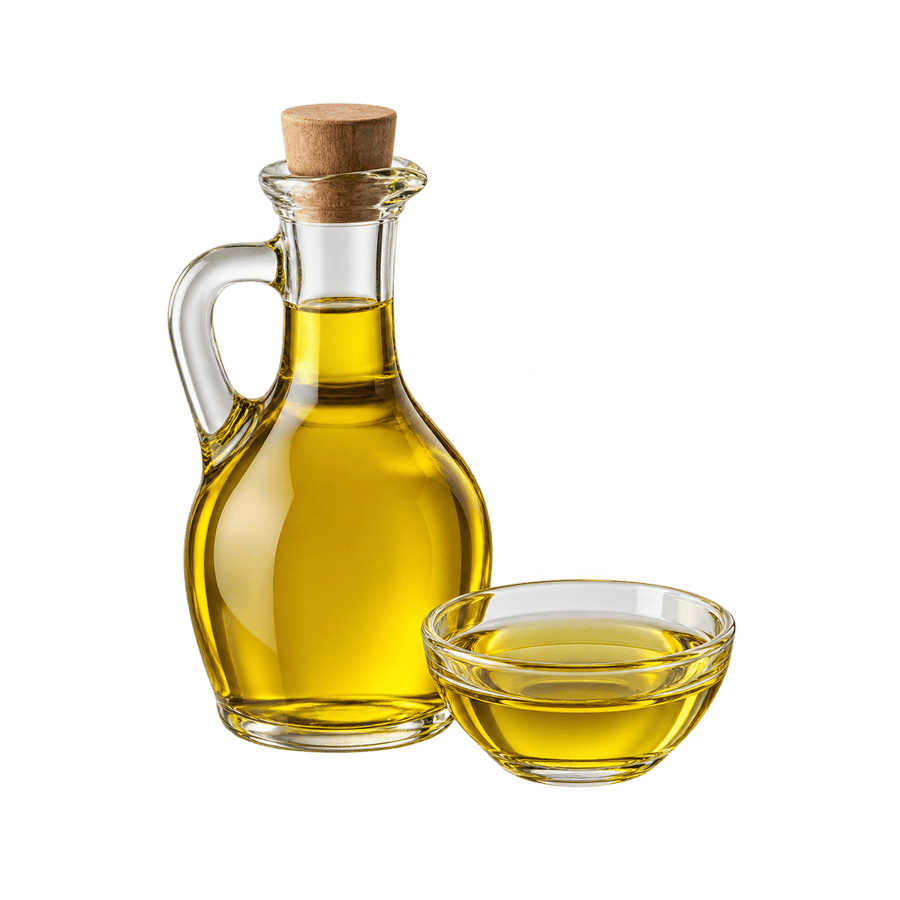
Every oil is pure fat, at about 8 calories per ml. A tablespoon of olive oil has about 14 g of fat, with about 9.9 g monounsaturated and 1.8 g saturated, against about 7.2 g saturated in a tablespoon of butter. That makes it a better pick than butter for a salad. It doesn’t make a tablespoon of it any lighter.
The numbers
| Calories | |
|---|---|
| A teaspoon of olive oil | About 40 |
| A tablespoon of olive oil | 119 |
| A tablespoon of butter | 102 |
| A whole head of romaine, about 626 g | About 106 |
| A whole head of iceberg, about 539 g | 65 |
| 2 tablespoons of olive oil | 238 |
| A quarter cup of olive oil, 4 tablespoons | 476 |
A whole head of iceberg has about half the calories of a tablespoon of oil. The spoon you pour over a salad can easily be the biggest single number in it.
What the grade can’t see
The bowl builder grades a salad on the six meters Gyroscope grades a meal on, and olive oil never pulls Processing or Glucose down, since it’s real food with no sugar. Put 4 tablespoons of olive oil on our lunch bowl of romaine, chicken, chickpeas, tomato and cucumber, and it still grades A+, for a 170 lb person eating 2,000 calories a day, though its Nutrients meter drops, since the oil adds calories and no minerals. It’s also about 810 calories, near the top of a meal on that day, and well past it on 1,600.
The letter tells you the bowl is well built. It doesn’t tell you that two of those tablespoons are past our line.
Why keep the oil at all
Some fat on a salad is what lets you absorb the beta-carotene, lycopene and vitamin K in the vegetables. In a 2004 study, 7 people absorbed almost none of a salad’s carotenoids with fat-free dressing, and more with each step up in oil. In a 2012 trial of 29 adults, the amount of fat mattered more than the kind, and canola oil, soybean oil and butter all worked.
Two tablespoons of olive oil hold 28 g of fat, the same as the full-fat dressing in the 2004 study. That’s why our line is one to two tablespoons on a meal salad, and less on a starter.
The best case for pouring freely
“People in the Mediterranean pour olive oil on everything, and they’re famously healthy.” Olive oil is a good fat, and the US guidelines put it first among the fats to cook with or add to a meal. That’s advice about which fat to pick. Olive oil poured on top of everything else you eat still adds 119 calories a spoon, and a salad that started at 300 calories can end up at 600 without looking any different.
6 sources
- Gebhardt and Thomas, Nutritive Value of Foods, Home and Garden Bulletin 72, USDA Agricultural Research Service, 2002 (olive oil item 176, butter item 152, iceberg item 1123)ars.usda.gov
- USDA Standard Reference, oil, salad or cooking, olivenutritionvalue.org
- USDA Standard Reference, lettuce, cos or romaine, raw (1 head = 626 g)nutritionvalue.org
- US Department of Agriculture and US Department of Health and Human Services, Dietary Guidelines for Americans, 2025 to 2030cdn.realfood.gov
- Goltz et al., Meal triacylglycerol profile modulates postprandial absorption of carotenoids in humans, Molecular Nutrition and Food Research, 2012pubmed.ncbi.nlm.nih.gov
- Brown et al., Carotenoid bioavailability is higher from salads ingested with full-fat than with fat-reduced salad dressings as measured with electrochemical detection, American Journal of Clinical Nutrition, 2004pubmed.ncbi.nlm.nih.gov