Fat-free dressing is the healthy choice
Short answerNo
On this page
No. Fat-free dressing saves calories, and it costs you most of the beta-carotene and lycopene in the vegetables. In a 2004 study, 7 people who ate a salad with fat-free dressing absorbed almost none of them. In two later trials, more fat meant more absorbed, and the kind of fat counted less than the amount.
What we’d do
Put a tablespoon of olive oil on your salad, two on a big meal bowl, and add as much vinegar or lemon as you like. If you’re cutting calories, cut the croutons or the cheese before the oil. The oil is what lets you get the color out of the carrots, tomatoes and spinach you paid for.
If you remember three things
- The color in vegetables needs fat to get in. Beta-carotene and lycopene dissolve in fat, not in water.
- With no fat, almost none was absorbed. More oil brought more in, in all three trials.
- The amount of fat mattered more than the kind. Canola, soybean oil and butter all worked.
Why people believe it
Fat has the most calories of anything you eat, and a fat-free dressing promises the same tang for a fraction of them. A tablespoon of light Italian has about 16 calories and 1 g of fat. A tablespoon of olive oil has 119 calories and 14 g of fat. If the goal is fewer calories, fat-free looks like the obvious pick.
The calorie saving is real. What the label doesn’t say is what happens to the vegetables.
A simple way to picture it
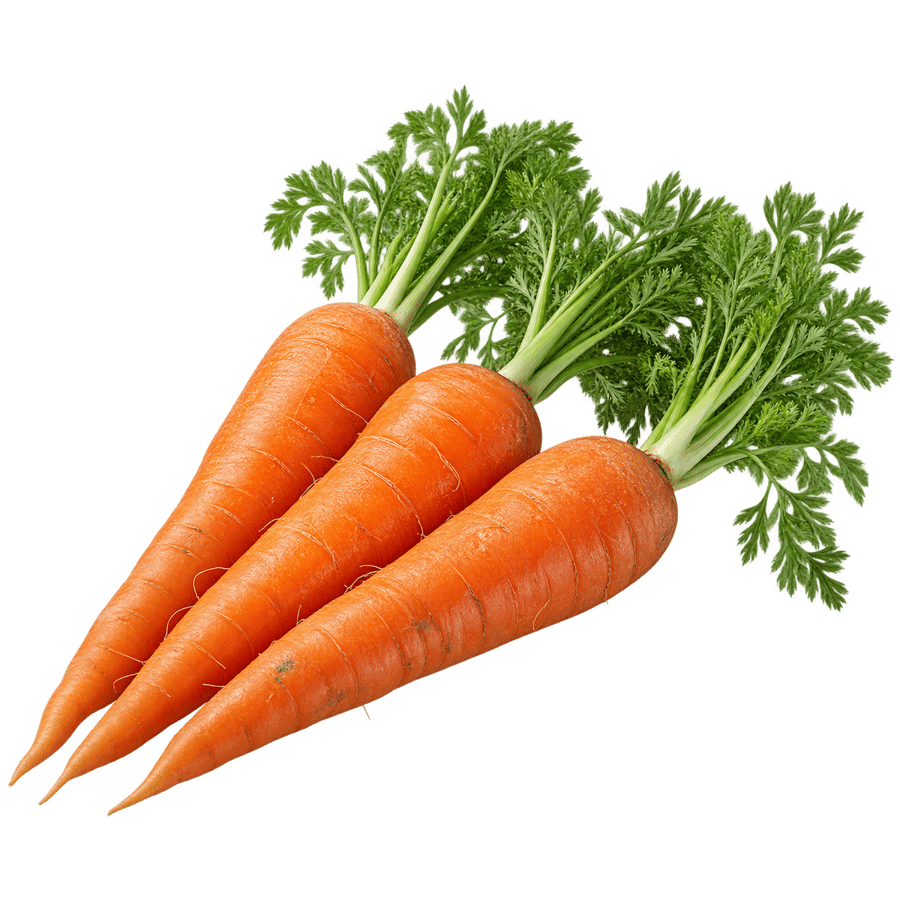
Think of fat as the bus that carries the color out of your gut and into your blood. The orange beta-carotene in carrots and the red lycopene in tomatoes can’t travel on their own, since they don’t dissolve in water. With fat in the meal, they climb aboard. With no fat, the bus never comes, and most of the color leaves with the rest of the meal.
The real bus has a name. The cells lining your intestine pack fat from a meal into particles called chylomicrons and send them into your blood. The carotenoids ride along inside them. That’s what the researchers measured in all three studies below, carotenoids turning up in chylomicrons in the hours after a salad.
What the studies found
Fat-free against full-fat
7 people, Iowa State University, 2004. Brown and colleagues
Each person ate the same salad of spinach, romaine, cherry tomatoes and carrots three times, with dressing made with 0, 6 or 28 g of canola oil. With the fat-free dressing the researchers saw “essentially no absorption of carotenoids”. The reduced-fat dressing let some in, and the full-fat one the most.
Seven people, one meal each, and it measured absorption, not health.
How much against which
29 adults, 2012. Goltz and colleagues
The salads came with 3, 8 or 20 g of canola oil, soybean oil or butter. Twenty grams raised absorption over 3 and 8 g for every carotenoid but alpha-carotene. The amount of fat had a bigger effect than the kind.
One meal per test. Canola trended a little above butter for two carotenoids, too little to be sure of.
From none to two spoons
12 women, 2017. White and colleagues
Five salads with 0, 2, 4, 8 or 32 g of soybean oil. Alpha-carotene, lycopene, vitamin K and a form of vitamin A rose in a straight line all the way to 32 g. Beta-carotene rose up to 8 g.
Twelve women, absorption only.
Two tablespoons of olive oil hold 28 g of fat, the same as the full-fat dressing in the 2004 study. One tablespoon, 14 g, sits between the 8 g and 20 g amounts in the 2012 trial.
What fat-free does save
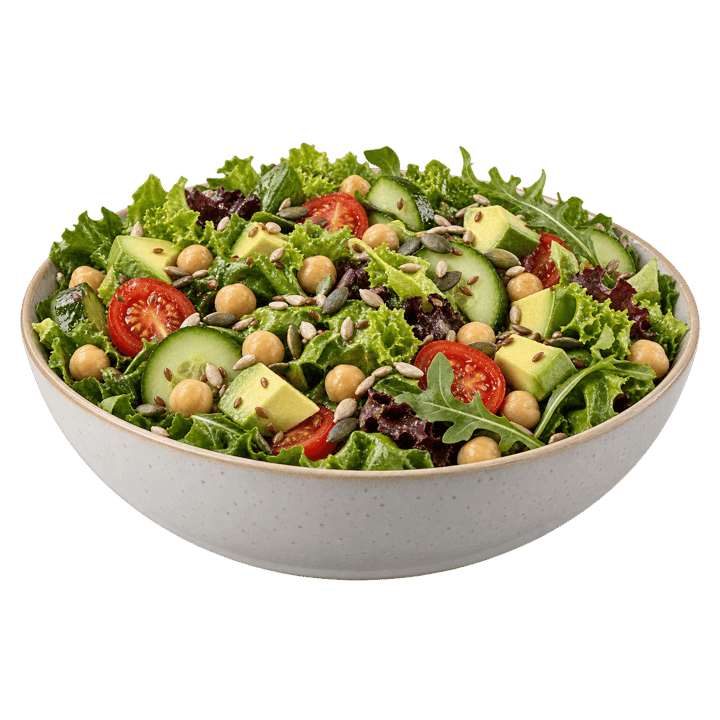
On our lunch salad, 3 cups of romaine with a palm of chicken, half a cup of chickpeas, a tomato and cucumber, a tablespoon of olive oil with vinegar brings it to about 453 calories. Two tablespoons of light Italian instead bring it to about 364. That’s about 90 calories saved, and the bowl still has all its protein and fiber.
It’s a real trade, and we’d take the other side of it. Ninety calories is about two thirds of an ounce of croutons, or a bit less than an ounce of cheddar. Take those off instead and keep the oil.
The best case for fat-free
“There’s fat in other things I eat that day, so the salad doesn’t need its own.” The studies tested fat eaten with the salad, in the same meal, since that’s the fat in your gut at the same time as the vegetables’ carotenoids. If your salad already has an egg, avocado, cheese or nuts on it, there’s some fat in the meal, though these trials put the fat in the dressing and didn’t test those foods.
All three trials were small, and they measured how much got into the blood after one meal, not whether anyone was healthier for it. But all three pointed the same way, and the fix costs a tablespoon of oil.
4 sources
- Brown et al., Carotenoid bioavailability is higher from salads ingested with full-fat than with fat-reduced salad dressings as measured with electrochemical detection, American Journal of Clinical Nutrition, 2004pubmed.ncbi.nlm.nih.gov
- Goltz et al., Meal triacylglycerol profile modulates postprandial absorption of carotenoids in humans, Molecular Nutrition and Food Research, 2012pubmed.ncbi.nlm.nih.gov
- White et al., Modeling the dose effects of soybean oil in salad dressing on carotenoid and fat-soluble vitamin bioavailability in salad vegetables, American Journal of Clinical Nutrition, 2017pmc.ncbi.nlm.nih.gov
- Gebhardt and Thomas, Nutritive Value of Foods, Home and Garden Bulletin 72, USDA Agricultural Research Service, 2002 (items 176 and 196)ars.usda.gov