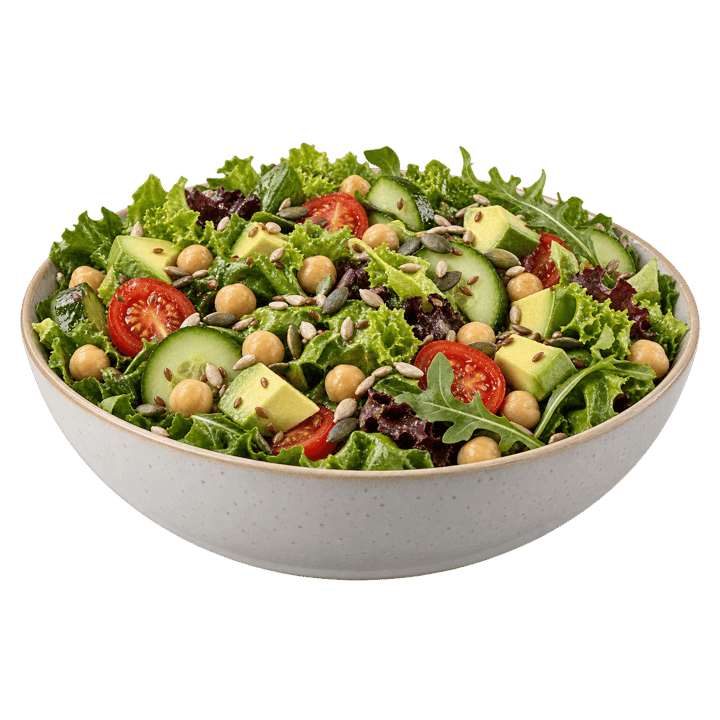
How do I add protein to a salad?
On this page
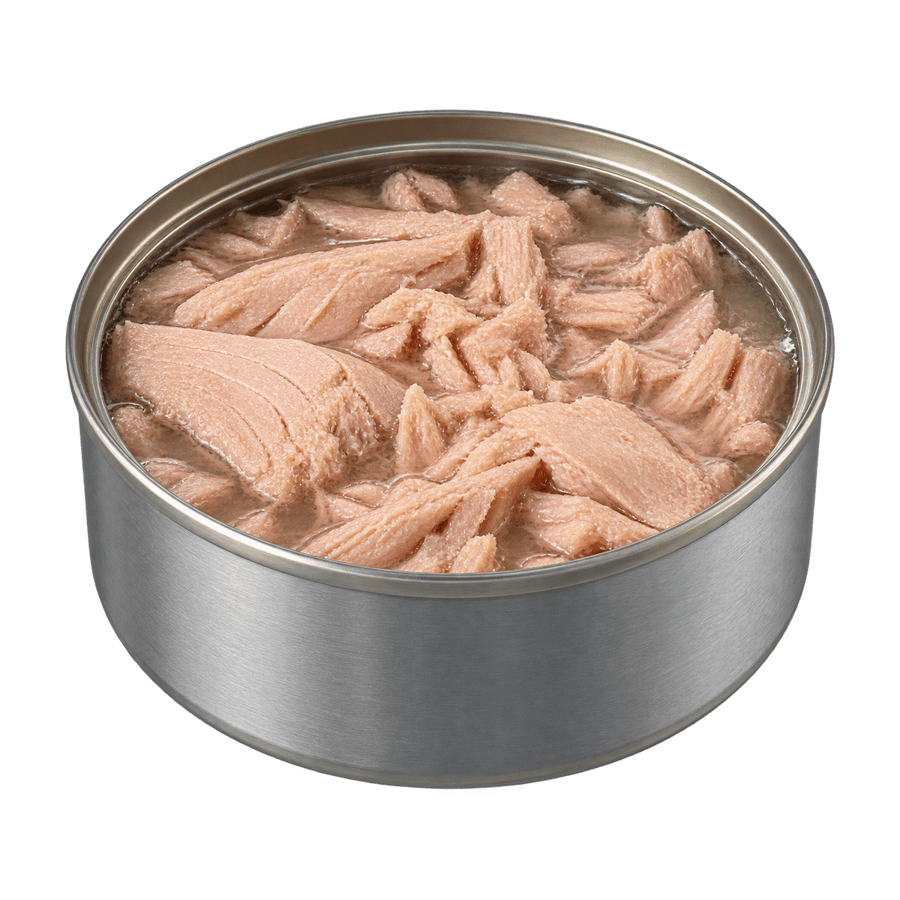
Put one real protein food on it, sized to your line. About 3.4 oz of grilled chicken or 4 oz of canned tuna gets you 30 g of protein for 135 to 160 calories, and a cup and a bit of cottage cheese does it for about 250. Beans help, but on their own you’d need 2 cups for 30 g, so pair half a cup with chicken, eggs or tofu.
The toppings people think of as protein mostly aren’t. Cheese, nuts and seeds do have some, but they’re mainly fat, so the calories pile up long before the protein does. Getting 30 g of protein from cheddar takes 4.2 oz and about 490 calories. From almonds it takes 5 oz and about 820. From chicken it’s about 160.
What we’d do
Pick one main protein, like chicken, tuna, salmon, shrimp, steak, eggs, tofu or cottage cheese, and give it a palm-sized spot. Then add half a cup of chickpeas or black beans for fiber and a few more grams of protein. A palm of chicken and half a cup of chickpeas comes to about 34 g. Use cheese and nuts for flavor, a little at a time.
Getting your protein from cheese or nuts is like an order where the shipping costs more than the thing you bought.
How much of each food for 30 g
| Food | Amount for 30 g | Calories |
|---|---|---|
| Tuna, canned in water | 4.1 oz, 116 g | 135 |
| Shrimp | 4.2 oz, 120 g | 143 |
| Chicken breast, roasted | 3.4 oz, 96 g | 158 |
| Steak | 3.5 oz, 98 g | 192 |
| Salmon, baked | 3.9 oz, 111 g | 240 |
| Cottage cheese | 1.2 cups, 242 g | 250 |
| Firm tofu | 12.2 oz, 347 g | 266 |
| Lentils, cooked | 1.7 cups, 330 g | 383 |
| Eggs | 5 large | 390 |
| Black beans, cooked | 2 cups, 344 g | 454 |
| Cheddar | 4.2 oz, 120 g | 489 |
| Chickpeas, cooked | 2 cups, 328 g | 538 |
From the USDA’s values, the same rows our bowl builder uses. The tofu row is the USDA’s firm tofu at 8.6 g of protein per 100 g. Tofu varies by brand and firmness, so if yours has more protein on the label, you’ll need less of it.
How much protein you need at a meal
Our line is 1.2 g of protein per kg of body weight a day, the low end of the 2025 to 2030 US guideline’s 1.2 to 1.6, split over your meals and rounded to 5. At three meals that’s about 25 g at 140 lb, 30 g at 170 and 35 g at 200. These are typical ranges. The Gyroscope app personalizes yours. The guideline itself says to put protein foods at every meal.
A 2015 review of the protein research landed in the same place. It found people felt fuller after higher-protein meals and suggested at least about 25 to 30 g a meal. They didn’t eat less at the next meal in those short trials, so the effect is modest, and it’s one reason a salad with chicken holds you longer than a bowl of leaves.
Plant proteins work better in pairs
Beans and lentils carry fiber and protein together, which is great, but 30 g from beans alone is 2 cups and 450 to 540 calories. Pairing half and half gets there for less.
| Pair, 15 g of protein from each | Calories |
|---|---|
| 0.8 cup of lentils and 0.6 cup of cottage cheese | about 320 |
| 1 cup of chickpeas and 6 oz of firm tofu | about 400 |
| 1 cup of black beans and 3 eggs | about 460 |
Find your amount
The protein ladder sets your line from your weight and draws each food as a bar sized by the calories it takes to get there. Tap a row to drop it into the builder. For meat-free bowls, see the best vegetarian protein for a salad.
3 sources
- Gebhardt and Thomas, Nutritive Value of Foods, Home and Garden Bulletin 72, USDA Agricultural Research Service, 2002ars.usda.gov
- US Department of Agriculture and US Department of Health and Human Services, Dietary Guidelines for Americans, 2025 to 2030cdn.realfood.gov
- Leidy et al., The role of protein in weight loss and maintenance, American Journal of Clinical Nutrition, 2015pubmed.ncbi.nlm.nih.gov