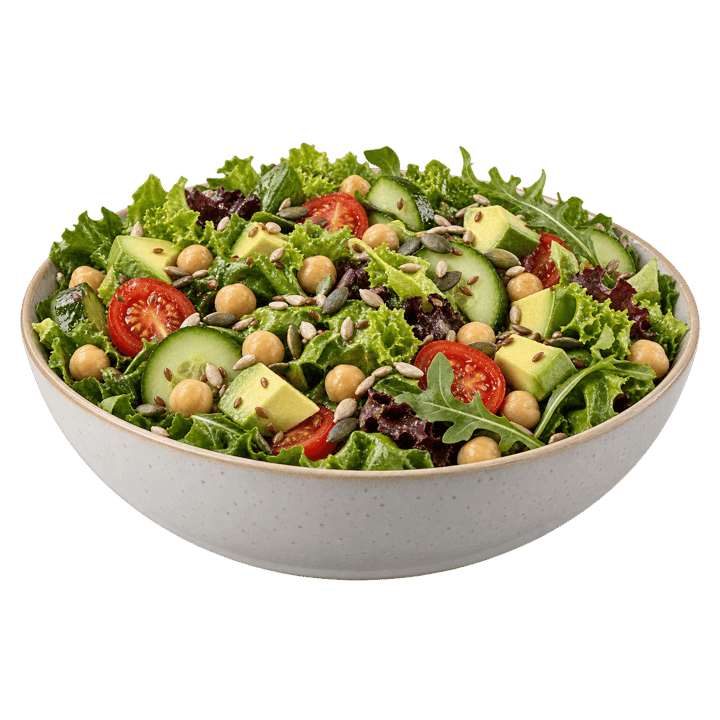
How much protein is in a salad?
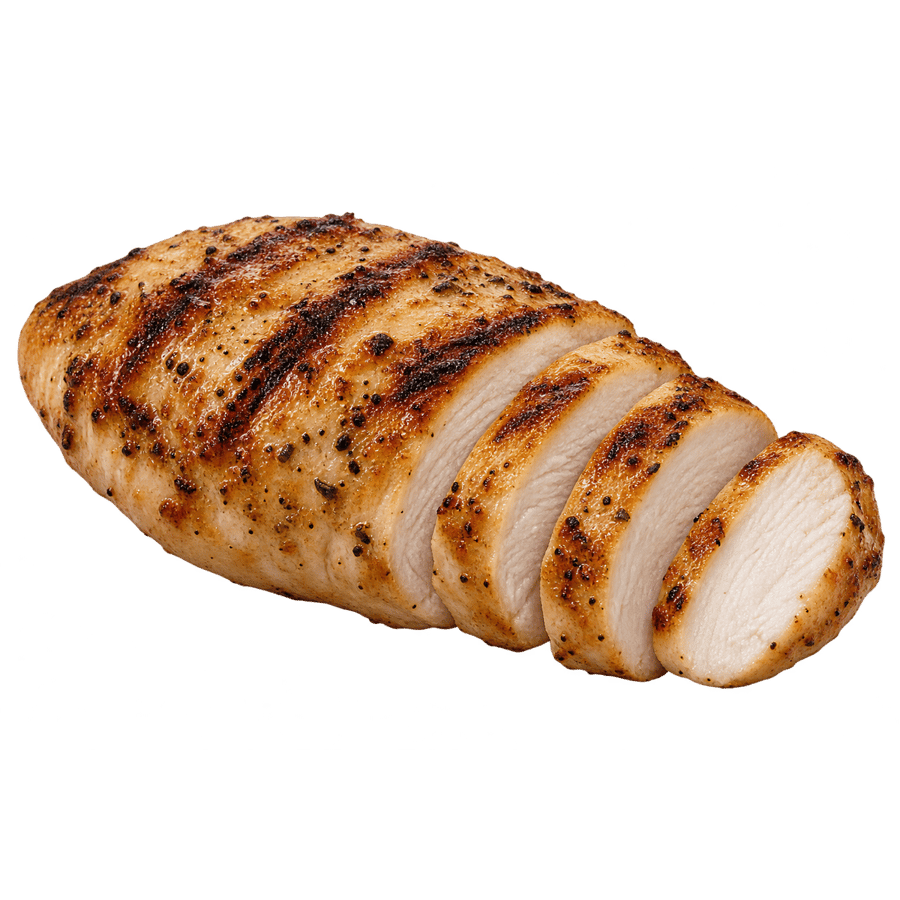
The leaves have almost none, about 1 g a cup of romaine. Everything else comes from what’s on top. A salad with a palm of chicken has about 32 g, a cobb about 50, a Greek salad about 9 and a caesar without chicken about 10.
“Salad” covers everything from a side of lettuce to a steak on greens, so the protein ranges from almost nothing to more than most people need at a meal. The common surprise is how little the classics have. A Greek salad and a caesar both feel like a full meal, and both are under a third of the way to most people’s line.
What we’d do
When a salad is your meal, give it your protein line, about 25 to 35 g for most people. If the menu salad you like is light on protein, add one thing rather than switching salads. A can of tuna turns a Greek salad into an A, and a palm of chicken takes a caesar from 10 g to 36.
Asking how much protein is in a salad is like asking how much money is in a wallet. It depends entirely on what someone put in it.
The salads people order
| Salad, with 2 tablespoons of dressing unless it says | Protein | Calories |
|---|---|---|
| Side salad | 3 g | 164 |
| Leaves, carrots and cucumber, a tablespoon of Italian | 6 g | 139 |
| Greek | 9 g | 352 |
| Caesar | 10 g | 360 |
| Chicken salad, made with mayo | 29 g | 364 |
| Salad with chicken | 32 g | 325 |
| Caesar with a palm of chicken | 37 g | 501 |
| Taco | 42 g | 711 |
| Cobb | 50 g | 643 |
The caesar’s 10 g come from the parmesan, the croutons and the romaine, in about equal parts. The cobb’s 50 come from chicken, egg, bacon and cheddar together.
Where salad protein comes from
| Food | Amount | Protein |
|---|---|---|
| Chicken breast, roasted | a palm, 3 oz | 27 g |
| Steak | a palm, 3 oz | 26 g |
| Cottage cheese | 1 cup | 26 g |
| Salmon | 3 oz | 23 g |
| Tuna, canned | 3 oz | 22 g |
| Shrimp | 3 oz | 21 g |
| Eggs | 2 large | 12 g |
| Lentils, cooked | half a cup | 9 g |
| Chickpeas or black beans | half a cup | 7.5 g |
| Cheddar | 1 oz | 7 g |
| Almonds | 1 oz | 6 g |
| Feta | 1 oz | 4 g |
| Parmesan, grated | 2 tbsp | 4 g |
| Romaine | 3 cups | about 3 g |
How much should a salad have?
Our line is 1.2 g of protein per kg of body weight a day, the low end of the 2025 to 2030 US guideline’s 1.2 to 1.6, split over your meals. That’s about 25 g a meal at 140 lb, 30 at 170 and 35 at 200. These are typical ranges. The Gyroscope app personalizes yours.
A side salad doesn’t need to hit it, since the rest of the meal will. A salad that’s your lunch does. Our bowl builder shows your bowl’s protein as a bar against your line, and the protein ladder shows the cheapest ways to fill the gap in calories.
4 sources
- Gebhardt and Thomas, Nutritive Value of Foods, Home and Garden Bulletin 72, USDA Agricultural Research Service, 2002ars.usda.gov
- USDA Standard Reference, lettuce, cos or romaine, rawnutritionvalue.org
- USDA Standard Reference, salad dressing, regular, caesarnutritionvalue.org
- US Department of Agriculture and US Department of Health and Human Services, Dietary Guidelines for Americans, 2025 to 2030cdn.realfood.gov